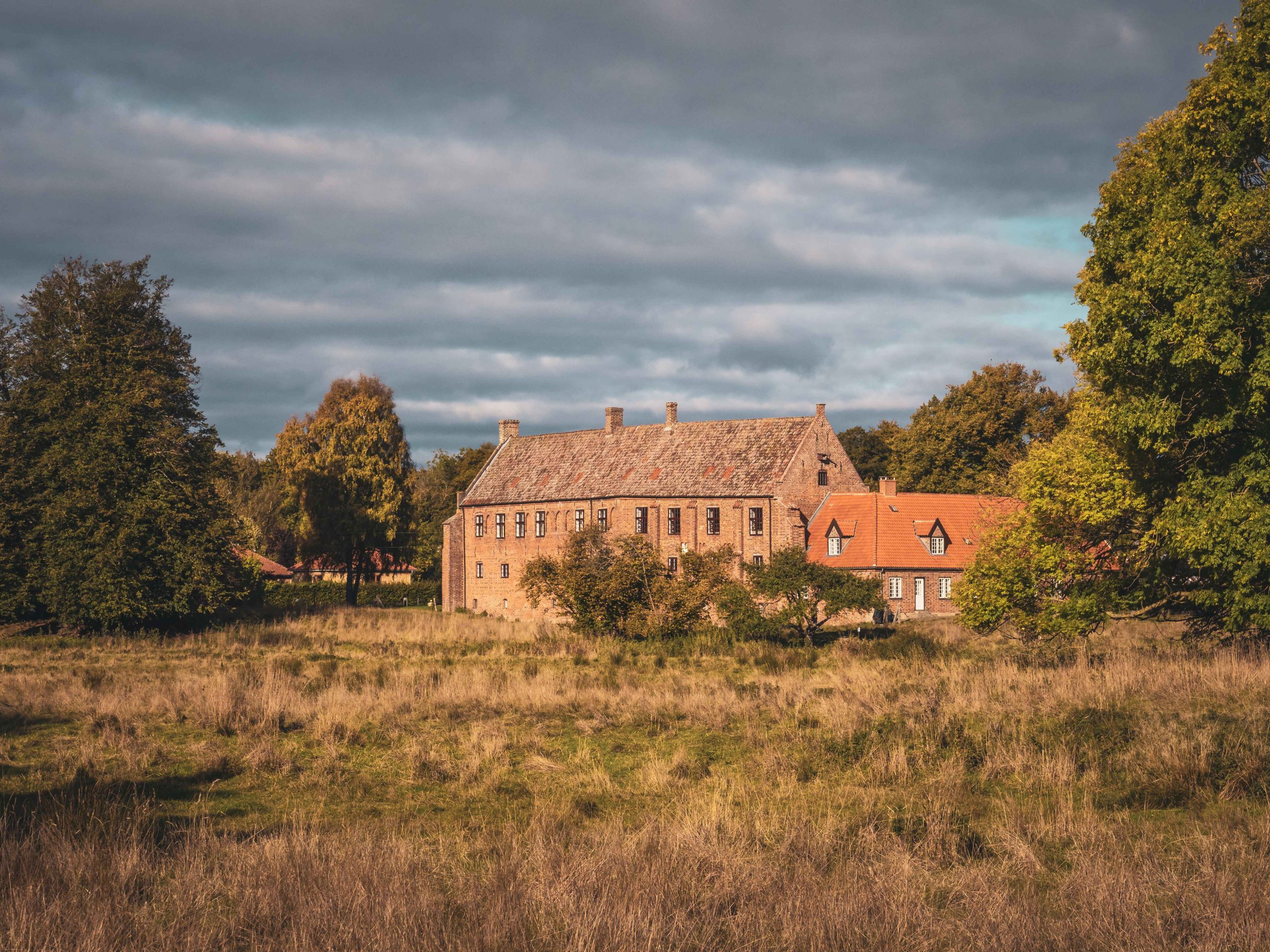
About Esrum Abbey & Møllegård
We are a cultural and historical attraction in North Zealand
Esrum Abbey features various exhibitions on the Cistercian Order and the abbey’s position of power in the Middle Ages. Møllegården consists of a café, an abbey shop, and a watermill. Esrum Abbey & Møllegård is home to the social enterprise Fonden Kilden and the secretariat of Kongernes Nordsjælland National Park.
Our Vision
Esrum Kloster & Møllegård’s vision is to be a place for everyone, where cultural heritage and nature experiences come together. We preserve and share the site’s cultural and natural heritage, which is tied to its buildings, nature, and landscape. We create experiences that leave a lasting impression on our visitors. All our events are rooted in social structures and power dynamics, human existence, and nature’s resources. Together with our partners and volunteers, we create experiences year-round—during the week, school breaks, and holidays.
Three themes
The monastery has been a center of power for both the Cistercian Order and the royal family. Lives have been dedicated to the faith within the monastery walls, and nature has played a crucial role for everyone who has lived here. Social structure and power dynamics, human existence, and nature’s resources are therefore the focal points of all events at Esrum Kloster & Møllegård today.
Human Existence
The monks at Esrum Abbey were deeply preoccupied with existential matters. They were united by their faith in the Christian God and their life’s mission, which was to intercede on behalf of others and ensure their salvation after death. When an individual monk entered the community, he renounced his former identity to devote his life to the Cistercian Order, to which the monastery belonged. When the monks left the monastery, new people and cultures moved in, bringing with them different values and worldviews. When we tell these people’s stories, we do so from the perspective of what it means to be human: Who were they, what did they believe in, and who did they want to be?
Social Structures and Power Relations
Many of the institutions that have been associated with the area in turn over the past 900 years have, in various ways, been an important part of Danish society and the ruling elite. In the Middle Ages, the monastery wielded considerable economic and political power. The monks at Esrum were part of society’s central power structure. They were well-educated and possessed important knowledge, which also contributed to their power. After the Reformation, the monks left, and the royal authority moved in and converted the monastery into a hunting lodge. Since then, the monastery has served many functions for various societal institutions. We’ll discuss the power dynamics of the site, social communities, and the major historical changes in social structure—both in the past and today.
Natural Resources
All the people who have been connected to this area have had a major impact on nature and the landscape. The area’s many resources—including Lake Esrum, the stream, the meadows, the forests, and the fertile farmland—have been utilized over time by monks, kings, and farmers alike. The monks harnessed the water for their water mills, and the forest provided fuel. When the king took over the site, the area’s resources continued to be utilized, and after Møllegården was established, the mill operated for centuries to come. We explore how nature has been a resource for people both in the past and today, and how people protect, manage, and (attempt to) determine what should happen to nature.

Vores formål
We will always inspire people to reflect on the relevant questions of life